GEOTECHNICALENGINEERING
KAMLOOPS
HomeInvestigationExploratory test pit

Exploratory Test Pit Investigations in Kamloops

Practical geotechnics, field-tested.

LEARN MORE

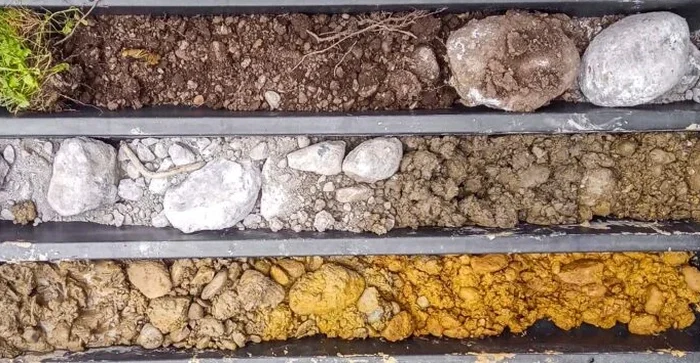
A recent commercial project along McGill Road hit unexpected fill at just over a meter deep, something the desktop study completely missed. That is the reality of building in Kamloops, where the valley floor conceals decades of backfill, old creek channels, and lacustrine silt layers deposited by glacial Lake Thompson. The exploratory test pit cuts through the guesswork. An excavator opens a trench to depths of 2.5 to 4 meters, and our geotechnical team logs the stratigraphy, takes bulk samples, and conducts in-situ density checks right there in the trench. For foundation designers working in the arid B.C. Interior, where colluvial fans spill off the surrounding benchlands, direct visual inspection of the subsurface often reveals more than a borehole log alone. We integrate the findings with a grain size analysis to quantify the silty sand composition typical of the South Thompson River terraces.

A single well-logged test pit in Kamloops can replace three speculative boreholes when the geology is layered and visually distinctive.
Our service areas

How we work

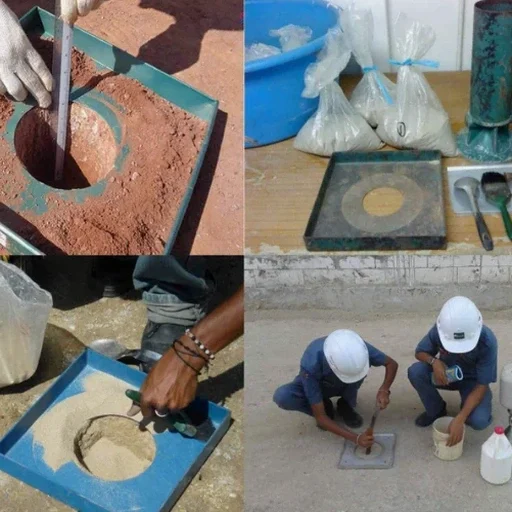
The equipment mobilized for a Kamloops test pit is typically a 20-tonne tracked excavator with a smooth-mouth cleanup bucket, paired with a portal-type trench shoring system when OSHA compliance demands entry by personnel. Unlike rotary drilling, the pit lets you walk down and feel the soil fabric in your hands. We log every lens and seam directly on a grid-referenced face, recording moisture profiles, mottling, and oxidation fronts that signal seasonal groundwater fluctuation common in the semi-arid climate here. Where access permits, we push a hand penetrometer into the pit floor and collect undisturbed Shelby tube samples from the sidewalls for triaxial testing back at our lab. The silty clay till that blankets much of Aberdeen and Sahali can look competent in an excavator bucket but soften dramatically under load, something we check with pocket vane shear readings taken at 0.5-meter vertical intervals. In areas near the Thompson River, we also run a sand cone density test on compacted backfill to confirm the contractor's compaction meets the project specification before the concrete goes in.
Exploratory Test Pit Investigations in Kamloops
Technical reference — Kamloops

Site-specific factors

Kamloops grew along the confluence of the North and South Thompson Rivers, and much of the downtown and Valleyview areas sit on fluvial and glaciofluvial deposits that can shift from coarse gravel to soft silt within a single city block. Older neighborhoods near the Tranquille corridor have undocumented fill from mid-century construction, including buried organic layers that generate methane and cause differential settlement. Skipping a test pit on a renovation or a laneway house foundation means gambling with these hidden lenses. We have pulled rotting wood debris, old concrete footings, and saturated ash layers out of pits less than two meters deep. The NBCC 2020 emphasizes due diligence in characterizing site stratigraphy, and the exploratory test pit provides that ground truth in a way no remote sensing method can replicate.

Need a geotechnical assessment?

Reply within 24h.

Email: info@geotechnicalengineering.vip

Regulatory framework

NBCC 2020 (National Building Code of Canada), CSA A23.3 (Concrete structures in contact with soil), ASTM D2488 (Visual-manual soil description), ASTM D1556 (Sand cone density), WorksafeBC Part 20 (Excavation and Trenching)

Technical parameters

ParameterTypical value
Typical excavation depth2.5 to 4.0 m (deeper with benching)
Excavator size15 to 25 tonne tracked
In-situ testingHand penetrometer, pocket vane shear, sand cone
Sampling methodBulk disturbed, Shelby tube undisturbed from sidewalls
Shoring requirementsTrench box or hydraulic shores per WorksafeBC
Logging standardUSCS classification, ASTM D2488 visual-manual
Backfill compaction verificationNuclear density gauge or sand cone (ASTM D1556)

Frequently asked questions

What does an exploratory test pit in Kamloops typically cost?

Budget between CA$780 and CA$1,200 for a standard single pit up to 3.5 meters deep, including excavator mobilization, logging by a geotechnical engineer, sampling, and a summary report with field logs. Deeper pits, multiple pits, or shoring requirements push the cost toward the upper end.

How long does the city or utility locate process take before you dig?

We submit a BC 1 Call ticket at least three business days before mobilization, and we do a private utility sweep with electromagnetic induction on site. In Kamloops, FortisBC gas lines and Telus fiber are the most common conflicts. The locate process rarely delays a pit by more than two days if we coordinate early.

Can you use a test pit instead of a borehole for a single-family home foundation design?

In many Kamloops neighborhoods with shallow competent till, yes. A test pit logged by a professional engineer, combined with a bearing capacity calculation and a grain size curve from the pit samples, often satisfies the building permit requirements under the NBCC. For deeper foundations or liquefaction-prone riverfront sites, we supplement the pit with SPT or CPT soundings.

Location and service area

We serve projects in Kamloops and surrounding areas.

View larger map