GEOTECHNICALENGINEERING
KAMLOOPS
HomeSlopes & WallsSlope stability analysis

Slope Stability Analysis in Kamloops: Geotechnical Expertise for Complex Terrain

Practical geotechnics, field-tested.

LEARN MORE

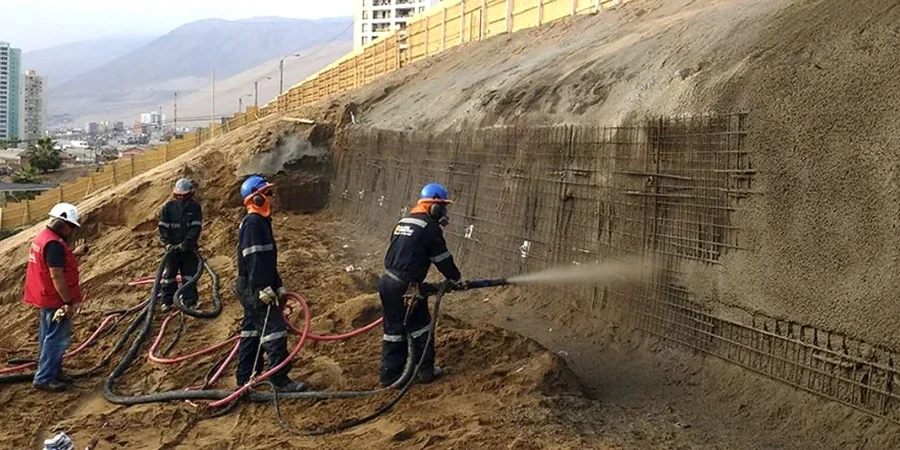
Kamloops grew rapidly after the Canadian Pacific Railway pushed through the Thompson Valley in the 1880s, and that growth pushed development onto increasingly steep terrain. The city sits at the confluence of the North and South Thompson Rivers, surrounded by benchlands and deeply incised gullies carved into glacial lake sediments. Every excavation, road widening, or hillside foundation in this city interacts with a complex geological history. We run slope stability analysis here with a clear focus: determine the factor of safety under both static and seismic loading, identify failure surfaces before they become problems, and give contractors and developers numbers they can trust. When a site sits on silt-rich glaciolacustrine deposits that lose strength when saturated, we often recommend pairing the analysis with a CPT investigation to map continuous stratigraphy and identify weak layers that traditional boreholes might miss.

A slope that stands today may fail tomorrow when pore pressures rise; we quantify that threshold so you don't discover it by accident.
Our service areas

How we work

A common mistake we see in the Kamloops area is treating a slope as homogeneous when the subsurface is anything but. The valley sides contain interbedded silts, clays, and sand lenses deposited during the glacial lake phase, and assuming uniform strength properties leads to slope designs that fail during spring thaw or heavy irrigation. We approach each analysis by first defining the stratigraphic model, then assigning strength parameters based on lab testing of undisturbed samples, and finally running limit equilibrium and finite element models. Parameters aren't pulled from generic tables: we use consolidated-undrained triaxial data and measured pore pressures. For sites where bedrock is shallow but fractured, we integrate data from test pits to verify rockhead depth and joint orientation. The output includes critical slip circles, probabilistic back-analysis where historical failures exist, and clear remediation thresholds for regrading, drainage, or structural reinforcement.
Slope Stability Analysis in Kamloops: Geotechnical Expertise for Complex Terrain
Technical reference — Kamloops

Site-specific factors

The lacustrine silts that dominate much of Kamloops' valley slopes present a specific failure mechanism: strain-softening at the silt-clay interface when groundwater rises during freshet. We have logged sections along the Thompson River corridors where the phreatic surface sits only 2 to 4 meters below grade in spring, reducing effective stress dramatically. Combine that with the region's seismic demand—Kamloops lies in a zone where NBCC 2020 assigns a spectral acceleration Sa(0.2) around 0.3 to 0.4 g depending on site class—and the pseudo-static analysis shows slopes that were stable under dry conditions dropping below FoS 1.0. The risk isn't theoretical. Infrastructure built on the lower benchlands faces cumulative deformation during wet cycles. We incorporate rapid drawdown scenarios for slopes adjacent to irrigation ponds or detention basins, and we specify drainage measures that intercept water before it reaches the failure zone.

Need a geotechnical assessment?

Reply within 24h.

Email: info@geotechnicalengineering.vip

Regulatory framework

NBCC 2020 (National Building Code of Canada) – seismic hazard and geotechnical provisions, CSA A23.3: Design of concrete structures (for retaining elements tied to slope stabilization), Canadian Foundation Engineering Manual (CFEM) 4th Edition – slope stability analysis guidelines, BC Ministry of Transportation – standard specifications for highway slope design

Technical parameters

ParameterTypical value
Analysis methodLimit equilibrium (Bishop, Spencer, Morgenstern-Price) + FEM where required
Seismic coefficient (kh)Per NBCC 2020 seismic hazard values for Kamloops
Target factor of safety (static)1.5 for permanent slopes, 1.3 for temporary cuts
Target factor of safety (seismic)1.1 minimum pseudo-static per local practice
Soil strength inputsCU triaxial, direct shear on discontinuities, ring shear on clay seams
Groundwater modelingSteady-state and transient seepage with measured phreatic surface
Typical failure modes assessedRotational, translational, compound, wedge sliding along bedding planes

Frequently asked questions

What does a slope stability analysis cost in Kamloops?

Budget between CA$1,750 for a straightforward cut slope on a residential lot with existing borehole data, and CA$6,340 for a complex multi-bench analysis requiring new subsurface investigation, lab testing, and seismic modeling. The spread depends on slope height, access constraints, and whether we need to coordinate drilling subcontractors.

When does the City of Kamloops require a slope stability report?

The City triggers the requirement under the Development Permit process for slopes steeper than 30% grade, properties within designated Hazard Development Permit Areas, or any construction within the top-of-bank setback zones along the Thompson River corridors.

How long does the analysis take from start to final report?

A standard analysis with existing geotechnical data takes 10 to 15 working days. If we need to mobilize a drill rig or excavator for test pits, add 5 to 8 days for field work and lab turnaround on strength testing.

What soil parameters do you use for the glaciolacustrine silts common in Kamloops?

We derive parameters from consolidated-undrained triaxial tests on undisturbed Shelby tube samples. Typical values for the intact silt range from c' = 5 to 15 kPa and φ' = 28° to 34°, but we never rely on generic numbers: we test every project because the clay fraction varies sharply across the valley.

Does the analysis account for wildfire effects on slope stability?

Yes. Post-wildfire loss of vegetation and root cohesion, combined with hydrophobic soil layers that increase runoff, changes the hydrologic regime significantly. We model these altered conditions explicitly for sites in or adjacent to the wildland-urban interface zones that surround Kamloops.

Location and service area

We serve projects in Kamloops and surrounding areas.

View larger map