GEOTECHNICALENGINEERING
KAMLOOPS
HomeInvestigationSPT (Standard Penetration Test)

SPT (Standard Penetration Test) in Kamloops: Reliable Subsurface Data for the Thompson Valley

Practical geotechnics, field-tested.

LEARN MORE

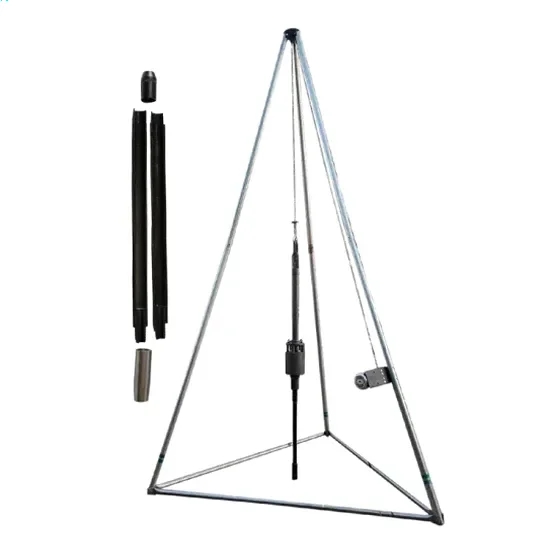
In Kamloops, the ground doesn't give up its secrets easily. The mix of glacial till, lacustrine silts along the river terraces, and the occasional cemented conglomerate up toward Aberdeen means you can't guess what's underfoot. We've seen projects where two boreholes fifty feet apart hit completely different refusal depths. The SPT drilling we run here follows ASTM D1586 using a safety hammer with energy calibration so the N-values you get actually mean something. With the 2020 NBCC now governing seismic site classification across BC, a proper blow count profile is the difference between a straightforward mat foundation and an expensive deep foundation redesign nobody budgeted for. Our crew knows how to push through the bouldery lenses common in the North Thompson deposits without losing the sampler.

An N-value without a soil description and a hammer energy ratio is just a number. In Kamloops silts, it's the difference between a stable footing and a post-earthquake settlement claim.
Our service areas

How we work

One mistake we keep seeing in Kamloops is consultants treating SPT data from the valley bottom the same as data from the upper benches. The post-glacial silts near the Thompson River are sensitive; they lose structure fast. If you don't pair your SPT program with grain-size analysis and Atterberg limits on the split-spoon samples, you'll miss the liquefiable layers that the NBCC seismic provisions specifically require you to characterize. A clean-looking N-value of 12 in these silts can be a bigger problem than a refusal on weathered till. We log every six-inch increment, note the drilling fluid return, and flag any sample that shows seepage or oxidation staining because that tells you more than the number on the field sheet. Our rigs carry both automatic trip hammers and doughnut hammers, and we report the hammer type and energy ratio so your geotechnical engineer can normalize the data properly instead of applying a generic correction factor that assumes conditions from somewhere in the Fraser Valley.
SPT (Standard Penetration Test) in Kamloops: Reliable Subsurface Data for the Thompson Valley
Technical reference — Kamloops

Site-specific factors

Kamloops sits in a semi-arid climate, but the freeze-thaw cycle here is brutal. Winter temperatures dip to minus 20 Celsius and swing above freezing within a week, so the ground heaves and settles in ways that recompact the upper six feet of soil. If your SPT data was collected in August when the silts are bone-dry, those N-values will read higher than the same material in March when it's saturated from snowmelt. We schedule winter drilling with heated water tanks to avoid freezing the rods, but we also recommend seasonal repeat testing on critical sites where the moisture content of the near-surface soils affects the blow count by more than 15%. The valley's seismic setting adds another layer: Kamloops is outside the Cascadia subduction influence, but the local crustal faults can produce shallow events that mobilize silty soils with N-values below 15. A single SPT log without a fines content curve won't protect your structure against that scenario.

Need a geotechnical assessment?

Reply within 24h.

Email: info@geotechnicalengineering.vip

Regulatory framework

ASTM D1586-18: Standard Test Method for Standard Penetration Test (SPT) and Split-Barrel Sampling of Soils, ASTM D6066-11: Standard Practice for Determining the Normalized Penetration Resistance of Sands for Evaluation of Liquefaction Potential, NBCC 2020 (National Building Code of Canada), Part 4, Division B, Section 4.1.8: Seismic Design, CSA A23.3-14: Design of Concrete Structures (foundation provisions referencing geotechnical parameters from SPT), BCBC 2024 (British Columbia Building Code), referencing NBCC 2020 with provincial amendments for seismic hazard values

Technical parameters

ParameterTypical value
Hammer TypeSafety hammer (auto-trip) with energy calibration per ASTM D4633
SamplerStandard 2-inch O.D. split spoon, 18-inch length
Blow Count RecordingN-value per 6-inch increments (0-6, 6-12, 12-18 inches)
Borehole Diameter2.5 to 8 inches depending on depth and casing needs
Seismic Site ClassDetermined per NBCC 2020 Table 4.1.8.4.A using N60 values
Liquefaction ScreeningSeed & Idriss simplified procedure with fines content correction
Reporting StandardASTM D1586 / D6066 with energy-corrected N60 profiles

Frequently asked questions

How much does an SPT investigation cost for a typical single-family lot in Kamloops?

For a residential lot in areas like Aberdeen or Juniper Ridge, an SPT program with two boreholes to 15 meters and basic lab testing on selected samples typically runs between CA$700 and CA$980 per borehole, depending on access and depth. Deeper holes or sites in the Pineview area where boulders slow down drilling may push toward the upper end of that range. The price includes the drilling crew, the split-spoon sampling, N-value logging, and a field report with the energy-corrected N60 profile.

How many SPT blows constitutes refusal in the Kamloops till?

We call refusal at 50 blows per 6 inches, which is the ASTM D1586 standard. In the dense basal till common across the Thompson Valley, refusal can happen anywhere from 8 to 25 meters depending on whether you're on the north or south side of the river. When refusal is reached above the target depth, we typically switch to coring or recommend a CPT sounding if the till matrix is predominantly sand and gravel.

Do you need a geotechnical engineer on site during SPT drilling?

Under the Engineers and Geoscientists BC (EGBC) professional practice guidelines, the field investigation must be supervised by a qualified professional, but the driller handles the hammer and sampling. Our crew logs the blow counts and recovers the samples; your geotechnical engineer reviews the logs, selects samples for lab testing, and signs off on the final report. We coordinate with several local Kamloops engineering firms if you need a referral.

Location and service area

We serve projects in Kamloops and surrounding areas.

View larger map