GEOTECHNICALENGINEERING
KAMLOOPS
HomeIn-Situ TestingField permeability test (Lefranc/Lugeon)

Lefranc and Lugeon Permeability Testing in Kamloops

Practical geotechnics, field-tested.

LEARN MORE

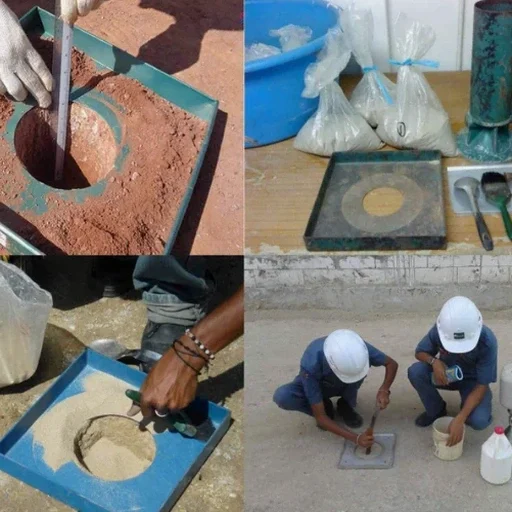
NBCC Division B and ASTM D6391 set clear requirements for hydraulic conductivity data, and in Kamloops the semi-arid climate and stratified glacial deposits make desk estimates unreliable. The Thompson River valley often hides perched water tables and silty lenses that laboratory remolding cannot capture. Our team runs the Lefranc test in soil and the Lugeon test in bedrock, delivering site-specific permeability values you can use directly in dewatering design, excavation planning, and foundation drainage. Because Kamloops sits where lacustrine silts meet fluvial sands, guessing the coefficient of permeability can cost you weeks of delay. We measure it in place, under actual groundwater conditions, and report results that hold up to municipal plan review.

A single Lugeon test in fractured Kamloops basalt can reveal flow paths that borehole logs alone will never show.
Our service areas

How we work

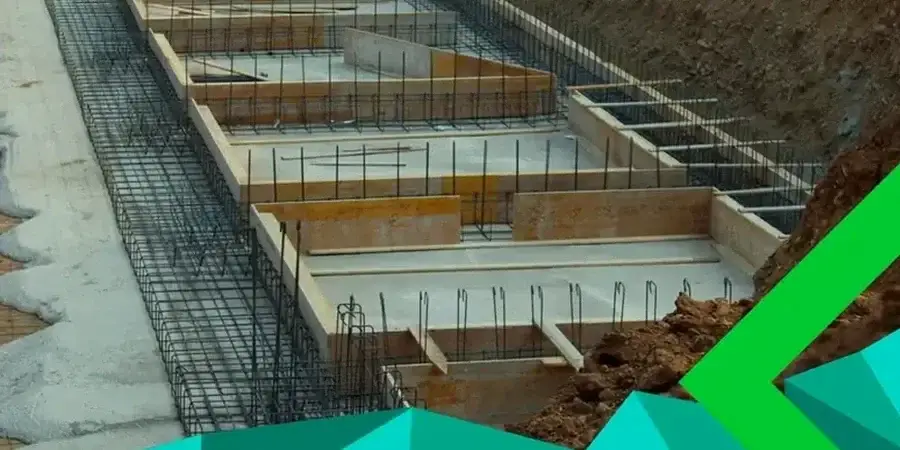
A common mistake in the Kamloops area is running a single-stage falling-head test and treating it as a full permeability profile. Valley-bottom projects along the South Thompson often encounter alternating sand and silt beds, and a CPT test can map the stratigraphy, but only a staged Lefranc or Lugeon test measures the hydraulic conductivity of each distinct unit. We use inflatable packers to isolate test intervals, apply constant-head or variable-head procedures per ASTM D6391, and record flow rates at steady state. The data feeds directly into seepage analyses, cutoff wall design, and basement drainage sizing. Contractors who skip this step frequently end up with flooded excavations in April when the river rises and the silt layers trap water behind temporary shoring.
Lefranc and Lugeon Permeability Testing in Kamloops
Technical reference — Kamloops

Site-specific factors

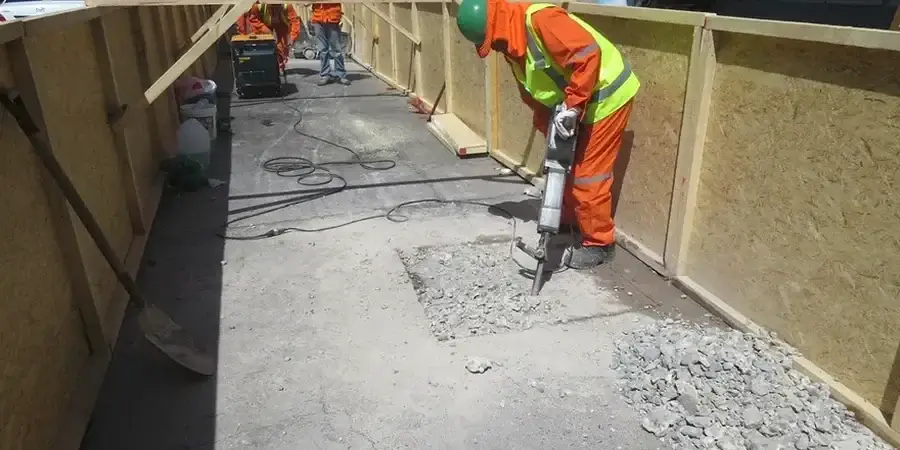
Kamloops grew along the CN and CP rail corridors, pushing industrial yards and subdivisions onto terraces of glaciofluvial sand and silt. Those terraces drain fast at the surface but often conceal low-permeability lacustrine layers at depth. When a new excavation cuts through the sand cap into the underlying silt, water ponds against the low-k stratum and destabilizes the slope above. We have seen this exact failure mode near Peterson Creek, where a commercial excavation lost three weeks to unplanned dewatering because pre-construction permeability testing was skipped. A properly executed Lefranc or Lugeon program measures the vertical and lateral variation in k before shoring goes in. That data lets you size wellpoints, calculate inflow, and keep the cut dry from day one. In fractured basalt near the Aberdeen escarpment, Lugeon testing also identifies open joints that can transmit water from recharge zones half a kilometer away.

Need a geotechnical assessment?

Reply within 24h.

Email: info@geotechnicalengineering.vip

Video overview

Regulatory framework

ASTM D6391-11 – Standard Test Method for Field Measurement of Hydraulic Conductivity, NBCC Division B – Section 4.2 (Foundation requirements), CSA A23.3 – Design of concrete structures, drainage considerations

Technical parameters

ParameterTypical value
Test standardASTM D6391-11
Soil test typeLefranc (constant/variable head)
Rock test typeLugeon (packer-isolated)
Typical test interval1.5 to 5.0 m per stage
Measuring range10⁻⁷ to 10⁻² cm/s
Packer typePneumatic single or double
Reporting formatk-value per interval, Lugeon units

Frequently asked questions

How much does a field permeability test program cost in Kamloops?

A typical program of 3 to 5 Lefranc or Lugeon stages in one borehole runs between CA$770 and CA$1.220, depending on depth, access conditions, and the number of packer setups required.

Which test do I need, Lefranc or Lugeon?

Lefranc applies to soil and heavily weathered rock; we use it in the alluvial and glaciofluvial deposits common across Kamloops. Lugeon is for competent bedrock — the basalt and metamorphic rock found in Aberdeen, Juniper Ridge, and the valley escarpments. If your borehole log shows both soil and rock, we run both methods in the same hole.

How long does a permeability test take on site?

Plan on 1 to 2 hours per test stage once the borehole is drilled and cased. A full profile with four stages in soil and two in rock typically completes in one working day, plus time for water level stabilization in low-k materials.

How do you ensure the test results are valid for Kamloops ground conditions?

We follow ASTM D6391 procedures and calibrate flow meters before each job. For Lugeon tests we plot pressure-versus-flow curves to detect turbulent flow or fracture dilation. Silt layers in Kamloops can take longer to saturate; we extend pre-test saturation time until steady-state conditions are confirmed.

Location and service area

We serve projects in Kamloops and surrounding areas. More info.

View larger map