GEOTECHNICALENGINEERING
KAMLOOPS
HomeRoadwayRigid pavement design

Rigid Pavement Design in Kamloops: Avoiding Cracking and Joint Failure

Practical geotechnics, field-tested.

LEARN MORE

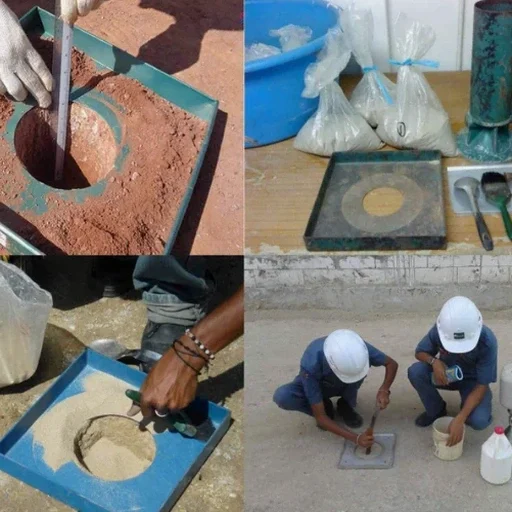
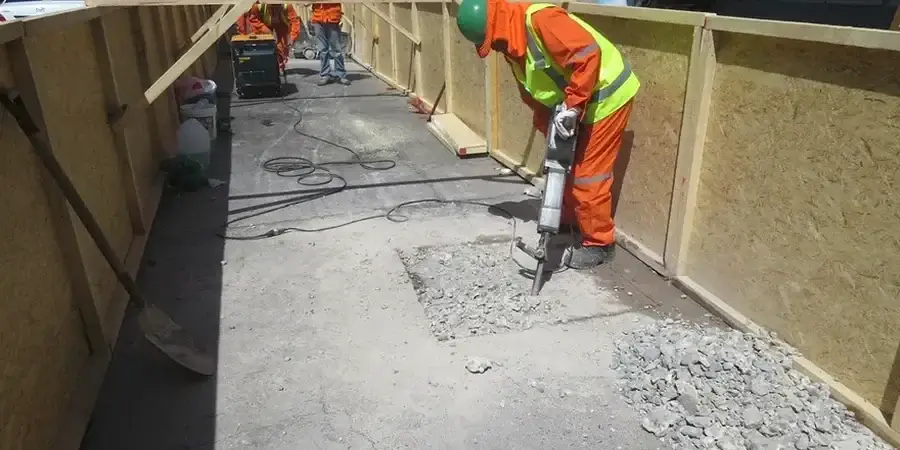
A lot of contractors in Kamloops make the same mistake. They pour a thick concrete slab over native silt and call it a day. Then winter hits. The freeze-thaw cycle in the Thompson Valley destroys the subgrade within two seasons. We have seen 12-inch reinforced slabs crack right down the middle because the base preparation ignored local soil behavior. Rigid pavement design here requires more than a standard mix. You need a subbase that drains, a concrete specification that handles temperature swings from -20 °C to 40 °C, and joint detailing that prevents spalling. Our team combines geotechnical investigation with structural pavement engineering. Before finalizing the slab thickness, we often run a plate load test to verify the modulus of the compacted subgrade directly on site. This gives us a real stiffness value. No guesswork. The pavement section then gets sized for the actual truck loads your facility will see, not a generic highway standard.

A rigid pavement in Kamloops lives or dies by its subbase drainage and air-entrained concrete mix. Ignore the freeze-thaw reality and you will replace the slab in three years.
Our service areas

How we work

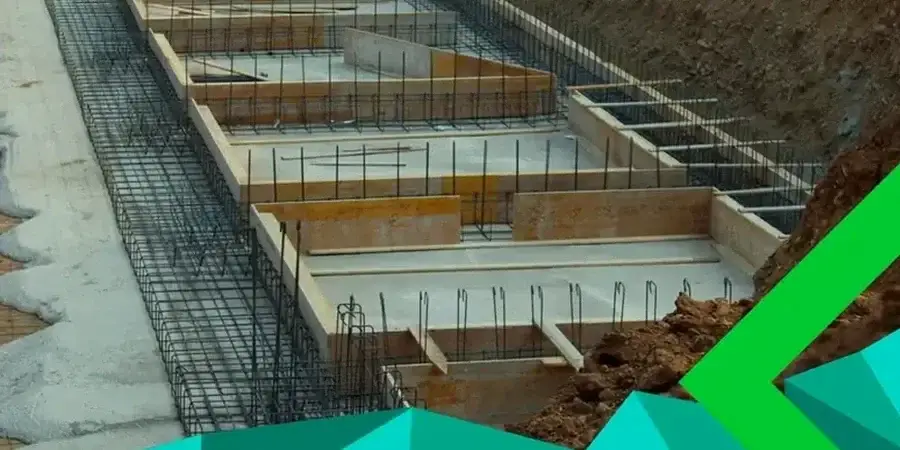
Last year we worked on a distribution center off the Yellowhead Highway. The owner wanted a joint-free slab. On paper it looked possible. The soil investigation told a different story. The upper 2 meters were glaciolacustrine silts with high plasticity. We knew the seasonal moisture variation under the slab edges would cause differential heave. The solution involved a 300 mm cement-stabilized subbase and a saw-cut contraction joint pattern at 4.5-meter spacing. For the concrete mix, we specified a 0.40 water-cement ratio and 6% air entrainment. Air entrainment is not optional in Kamloops. Without it, the surface scales off after one winter. The joint filler had to remain flexible down to -30 °C. We also cross-checked the area's static modulus with a CPT test to confirm there were no soft pockets under the northeast corner. The pavement has been through two full winter cycles now. Zero cracks. The key is matching the rigid pavement design to the specific microclimate of the Thompson-Nicola region.
Rigid Pavement Design in Kamloops: Avoiding Cracking and Joint Failure
Technical reference — Kamloops

Site-specific factors

The semi-arid climate in Kamloops creates a brutal cycle for concrete pavements. Summer temperatures push 35 °C, drying out the subgrade and causing shrinkage in the clay fraction. Then winter drops to -15 °C average lows, freezing any trapped moisture. The expansion lifts the slab corners. Spring thaw saturates the base material. If the rigid pavement design did not include a positive drainage layer, the pumping effect under repeated truck loads erodes the subbase in months. You end up with corner breaks and faulted joints. The risk is highest in the valley bottom near the Thompson River, where the water table fluctuates seasonally. Even on the benches, the naturally cemented silts lose strength when wetted. We mitigate this by specifying a geotextile separation layer between the subgrade and the granular subbase. This stops fines from migrating upward into the open-graded drainage layer. In our experience, this single detail doubles the pavement's service life in Kamloops.

Need a geotechnical assessment?

Reply within 24h.

Email: info@geotechnicalengineering.vip

Regulatory framework

CSA A23.1/A23.2 - Concrete Materials and Methods of Concrete Construction, CSA A23.3 - Design of Concrete Structures, ASTM D1195/D1196 - Repetitive Static Plate Load Tests of Soils, NBCC (National Building Code of Canada) Part 4 structural design, MTO (Ontario) Pavement Design Manual (adapted for BC conditions)

Technical parameters

ParameterTypical value
Concrete compressive strength (28-day)32-40 MPa (CSA A23.1 Class C-2)
Flexural strength (modulus of rupture)4.5-5.0 MPa (third-point loading)
Recommended slab thickness (industrial)180-230 mm (heavy forklift traffic)
Subbase material75-100 mm crushed aggregate, Gradation B
Joint spacing (unreinforced)24-30 times slab thickness
Air content (freeze-thaw durability)5-8% (CSA A23.1 exposure class C-1)
Minimum subgrade modulus (k-value)> 40 MPa/m (post-compaction)

Frequently asked questions

How much does a rigid pavement design report cost for a site in Kamloops?

A full design package including subgrade investigation, concrete mix specification, and joint layout typically falls between CA$2,230 and CA$9,360. The range depends on the slab area, the number of soil borings needed, and whether we need to run specialized tests like plate load or CPT soundings.

Do we need air-entrained concrete for an interior warehouse slab in Kamloops?

Yes, if the building is unheated or if the slab edges are near overhead doors that stay open in winter. We have seen interior slabs freeze near the perimeter. Air entrainment is cheap insurance against surface scaling caused by freeze-thaw cycling in the Thompson-Okanagan.

What is the biggest cause of joint spalling in rigid pavements here?

Poor aggregate interlock and late saw-cutting. In Kamloops, the low humidity and wind accelerate the concrete's initial set. If you cut the joints too late, you create microcracks at the bottom of the cut that later spall under traffic. We specify early-age saw cutting, usually within 4 to 8 hours after finishing.

Location and service area

We serve projects in Kamloops and surrounding areas.

View larger map