GEOTECHNICALENGINEERING
KAMLOOPS
HomeInvestigationCPT (Cone Penetration Test)

CPT Testing in Kamloops — Fast Stratigraphy Without Drilling

Practical geotechnics, field-tested.

LEARN MORE

The soil contrast between Sahali and Valleyview is something every foundation contractor in Kamloops learns to respect. Uphill in Sahali you get thin till over bedrock. Down in Valleyview the floodplain deposits run 15 to 20 metres deep with interbedded silt and sand. A standard borehole gives you disturbed samples every metre and a half. For continuous data, the CPT probe reads tip resistance and sleeve friction every two centimetres. That resolution matters when a thin clay seam can control slope stability or bearing capacity. We run the CPT test on both sides of the river and combine it with spt drilling where gravel refusal stops the cone. For pavement design on the North Shore industrial lots we layer in CBR testing to match the subgrade modulus to the truck loading expected at the site.

A CPT log every two centimetres shows what a split-spoon sample misses — and in Kamloops that missing layer is often the one that governs the design.
Our service areas

How we work

A recent warehouse project off Versatile Drive hit a pocket of soft organic silt at 4 metres. The geotechnical report flagged it as marginal for a slab-on-grade. The CPT picked it up as a sharp drop in tip resistance over a 60-centimetre band. That band was invisible in the standard SPT log because the sampler pushed right through it. Without the CPT the floor would have been designed on an overly optimistic bearing value. We pushed the cone to 18 metres, recording pore pressure dissipation at three depths. The data fed directly into settlement calculations and allowed the structural engineer to switch from deep piles to a mat foundation with a controlled fill section underneath. In Kamloops, where the valley stratigraphy changes fast between lacustrine silts and coarse alluvial fans, this kind of resolution pays for itself in one design revision. The cone also captures sleeve friction, which we correlate to undrained shear strength using the Nkt factor calibrated to local lab triaxial tests.
CPT Testing in Kamloops — Fast Stratigraphy Without Drilling
Technical reference — Kamloops

Site-specific factors

On the lower benches near the Thompson River we often see a clean sand layer at 6 to 8 metres that looks competent in a grab sample but triggers a liquefaction flag under seismic loading. Kamloops sits in a moderate seismic zone — NBCC 2020 assigns a peak ground acceleration around 0.15 to 0.20 g depending on the site class. A CPT with pore pressure measurement gives you the cyclic resistance ratio directly from the tip resistance and friction ratio. No sample disturbance, no lab turnaround delay. We run the liquefaction assessment using the Boulanger and Idriss (2014) procedure and deliver a factor of safety for every metre of the profile. The biggest cost risk is skipping the CPT and finding out during excavation that the bearing layer is thinner than assumed. One day of cone testing can prevent a six-figure foundation redesign. In the Aberdeen area, where glacial lake sediments dominate, the CPT also picks up sensitive clay layers that lose strength when remoulded — a hazard that a standard borehole log rarely identifies until it is too late.

Need a geotechnical assessment?

Reply within 24h.

Email: info@geotechnicalengineering.vip

Regulatory framework

ASTM D5778-20 — Standard Test Method for Electronic Friction Cone and Piezocone Penetration Testing of Soils, NBCC 2020 — National Building Code of Canada, seismic provisions (Division B, Part 4), CSA A23.3 — Design of Concrete Structures (referenced for foundation design inputs), Boulanger & Idriss (2014) — CPT and SPT Based Liquefaction Triggering Procedures

Technical parameters

ParameterTypical value
Maximum push depth (20-tonne rig)30 m typical, refusal-dependent
Measurement interval20 mm (tip resistance, sleeve friction, pore pressure)
Cone typePiezocone (CPTu) with u₂ transducer
Data channels recordedqc, fs, u₂, inclination, temperature
Compliance standardASTM D5778-20
Soil behaviour type classificationRobertson (1990) and updated SBTn charts
Pore pressure dissipation testst₅₀ recorded at target depths
Reporting outputContinuous log, SBT plot, N₆₀ equivalent, Su profile

Frequently asked questions

How much does a CPT test cost in Kamloops?

Mobilization to Kamloops and one day of CPT testing typically runs between CA$240 and CA$340 per hour, depending on depth, number of dissipation tests, and whether seismic cone is required. A standard 15-metre push with three dissipations and a digital report is usually completed in half a day. Sites with gravel refusal or tight access may add time. We provide a fixed-price quote after reviewing the borehole plan and site coordinates.

What depth can the CPT reach in Kamloops soils?

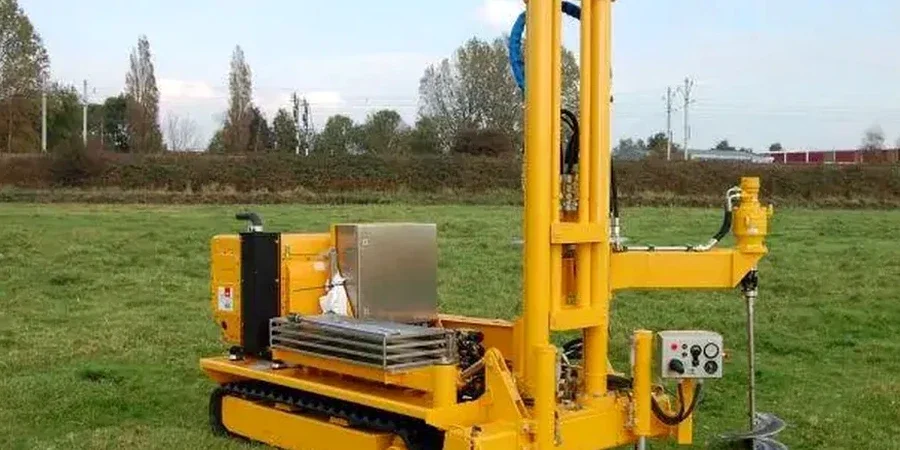
The 20-tonne truck-mounted rig reaches 25 to 30 metres in the silt and sand deposits common in the valley bottom. Gravel lenses in the alluvial fan deposits near Peterson Creek can cause refusal earlier, usually between 8 and 15 metres. When refusal is anticipated, we schedule an SPT drill rig as backup to complete the investigation below the gravel.

Does the CPT replace a standard borehole investigation?

No — the CPT complements boreholes. It gives continuous stratigraphy and in-situ strength but does not recover soil samples. Most projects in Kamloops use two or three CPT soundings to fill in the gaps between boreholes, plus one or two sampled boreholes for index testing and classification. The combination gives you both the high-resolution profile and the lab data needed for a defensible geotechnical report.

Location and service area

We serve projects in Kamloops and surrounding areas.

View larger map