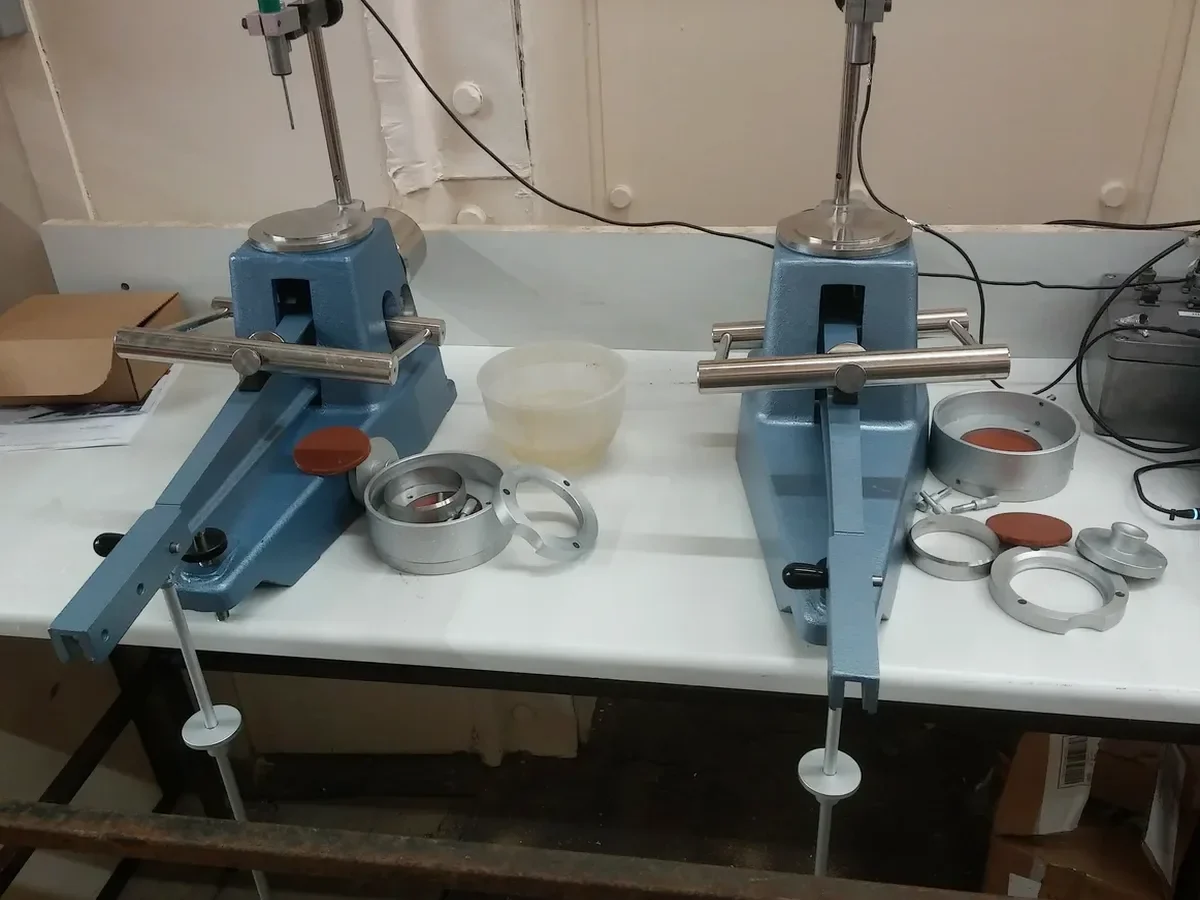
When you're working with silts and clays in Kamloops, the first classification step we always recommend is the Atterberg limits test. The Canadian Foundation Engineering Manual references these limits as a cornerstone for identifying cohesive soil behavior, and in this city, where lacustrine deposits and weathered till sit right next to arid benchlands, skipping them is a gamble. We run the liquid limit using the Casagrande cup method and follow ASTM D4318 for the plastic limit roll-out. It sounds old-school, but it's still the most practical way to predict how a soil will move when water content changes. For projects near the Thompson River or on the slope transitions around Aberdeen, we often combine this with a grain size analysis to separate the clay fraction from the silt, because Kamloops soils rarely come sorted clean. What we deliver isn't just a number — it's a direct input for your bearing capacity and settlement calculations, tied to the actual material coming out of your excavation.
A plasticity index above 20 in Kamloops lacustrine clays almost always means we need to revisit the drainage plan — these soils hold water and swell slow.