GEOTECHNICALENGINEERING
KAMLOOPS
HomeUnderground ExcavationsGeotechnical excavation monitoring

Geotechnical Excavation Monitoring in Kamloops: Protecting Your Project from Day One

Practical geotechnics, field-tested.

LEARN MORE

A contractor we worked with near the Thompson River last fall had a straightforward excavation plan—until the silt layers started shifting three meters down. What looked like competent overburden turned into a race against groundwater seepage, and without real-time monitoring data, the shoring adjustments would have been guesswork. That scenario is more common than people admit in Kamloops, where the valley geology mixes glacial till, lacustrine silts, and fractured bedrock in ways that surprise even experienced crews. We run deep excavation monitoring programs that catch those surprises early, combining inclinometers, piezometers, and vibration sensors into a single dashboard the site team can read without a geotechnical degree. In a city that sits at the confluence of two major rivers and experiences rapid snowmelt cycles each spring, pore pressure can change overnight. Our instrumentation gives you the heads-up before a deformation becomes a failure.

In Kamloops, the real danger isn't the depth of the excavation—it's the speed at which silty layers can transition from stable to flowing when pore pressure changes.
Our service areas

How we work

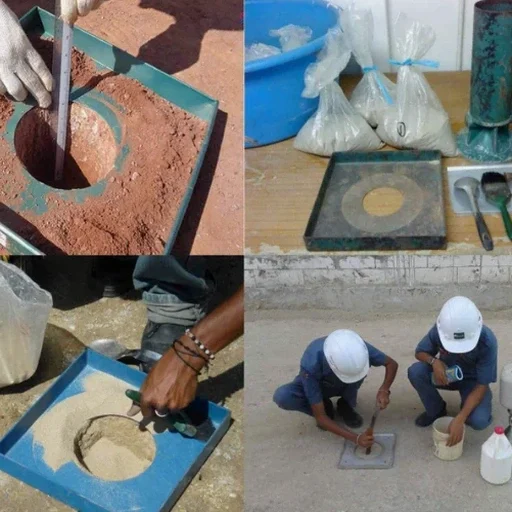
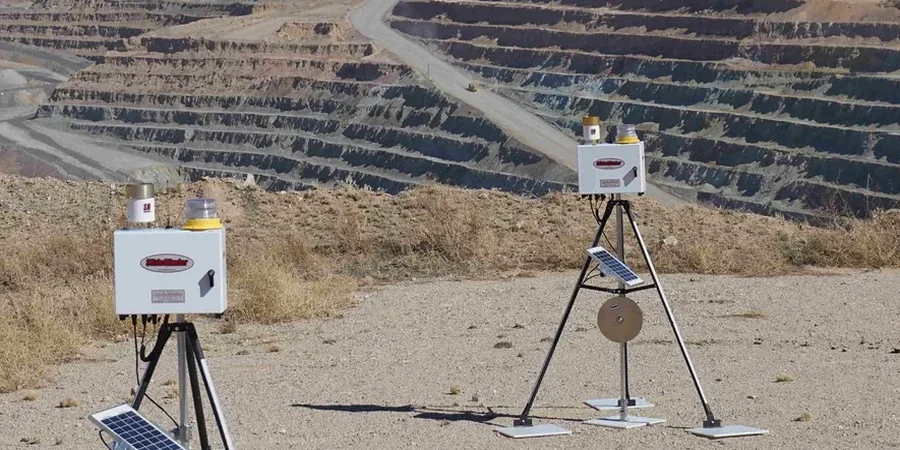
What we see repeatedly in Kamloops is that excavation risk concentrates at the interface between dry surficial deposits and the underlying saturated silt or clay. The north bank of the South Thompson, in particular, tends to hold perched groundwater that conventional dewatering misses. That is why we configure monitoring plans around the local hydrostratigraphy, not just the cut depth. A typical setup includes automated total stations tracking prism targets on the shoring wall, paired with in-situ permeability testing to confirm drainage assumptions, and crack meters across any existing structures within the zone of influence. The data streams into a cloud portal where the project engineer can set threshold alerts—say, five millimeters of lateral movement in a 24-hour window—and receive an SMS before the morning huddle. We also tie into the NBCC 2020 requirements for excavation safety and follow CSA A23.3 for concrete elements adjacent to the dig. When bedrock is shallow, as it often is up toward Aberdeen, we add vibration monitoring to protect nearby foundations from rock-breaking operations, complementing the approach with slope stability analysis for any cut face exceeding three meters.
Geotechnical Excavation Monitoring in Kamloops: Protecting Your Project from Day One
Technical reference — Kamloops

Site-specific factors

Kamloops sits in a semi-arid climate, which tricks some builders into underestimating water problems—until the spring freshet hits. When the North and South Thompson rivers rise simultaneously, the groundwater table across the valley floor can climb half a meter in under 48 hours. An unmonitored excavation in those conditions becomes a bathtub with structural consequences. The other regional wildcard is the lacustrine silt left from glacial Lake Thompson; it looks firm in a test pit but loses shear strength dramatically when saturated. We have pulled inclinometer casings that showed 40 millimeters of deflection overnight after an unexpected silt layer was exposed. That is why our instrumentation plans always include redundant piezometers at two depths, and why we insist on baseline readings before the first bucket cuts soil. Monitoring is not an add-on: in this geology, it is the difference between a controlled dig and an emergency shoring retrofit that costs six times as much and delays the project by weeks.

Need a geotechnical assessment?

Reply within 24h.

Email: info@geotechnicalengineering.vip

Regulatory framework

NBCC 2020 (National Building Code of Canada) – Part 4, excavation and foundation requirements, CSA A23.3 – Design of concrete structures, Annex K for vibration limits, ASTM D6230 – Standard guide for monitoring ground movement using inclinometers and extensometers, WorkSafeBC OHS Regulation Part 20 – Excavation and trenching safety

Technical parameters

ParameterTypical value
Monitoring frequency (automated)Readings every 5 to 15 minutes
Lateral movement detection thresholdAs low as 2 mm at prism targets
Piezometer range0–100 kPa pore pressure (VW sensors)
Vibration monitoring standardPPV per CSA A23.3 Annex K
Typical instrumentation depthUp to 25 m below excavation base
Data delivery platformCloud portal with SMS/email alarms
Reporting intervalDaily summary + weekly engineering review

Frequently asked questions

What does geotechnical excavation monitoring typically cost for a mid-size project in Kamloops?

For a commercial excavation with four to six instrument locations and automated data collection, budgets in the Kamloops area generally fall between CA$1,140 and CA$3,790 depending on duration, sensor count, and reporting frequency. A short-term trench with manual readings sits at the lower end, while a deep excavation running several months with cloud telemetry and weekly engineering reviews approaches the upper figure. We quote fixed-price scopes after reviewing the geotechnical baseline report and shoring design, so you know the instrumentation cost before mobilization.

How quickly can you deploy monitoring instruments if we hit unexpected ground conditions?

We keep a stock of vibrating-wire piezometers, inclinometer casing, and readout units in the Thompson-Okanagan region. For urgent deployments in Kamloops, we can have a technician on site within 24 hours to install initial instrumentation—typically a standpipe piezometer and a survey prism array—and start delivering data the same day. Full automated systems take an additional two to three days to commission.

Which parameters are most critical to monitor in Kamloops soils?

Pore-water pressure and lateral deformation lead the list. The valley's glacial lake silts are highly sensitive to saturation changes, and we have measured pore pressure spikes of 15 kPa within hours of a heavy rain-on-snow event. Horizontal movement at the shoring face is the other key indicator; we set alert thresholds conservatively because silt can transition from creep to flow with very little warning. Vibration monitoring becomes critical when rock excavation is required near existing structures, particularly in the Aberdeen and Sahali areas where residential foundations sit close to cut slopes.

Do you provide monitoring reports that WorkSafeBC and municipal inspectors will accept?

Yes. Our daily data summaries and weekly engineering review reports are formatted to meet WorkSafeBC Part 20 documentation requirements for excavation safety, and we reference NBCC 2020 and CSA A23.3 where applicable. Each report includes instrument readings plotted against baseline values, exceedance logs if any thresholds were triggered, and a plain-language commentary from the reviewing engineer. Municipal building officials in Kamloops have accepted our reporting package for both commercial and infrastructure excavations.

Location and service area

We serve projects in Kamloops and surrounding areas.

View larger map