GEOTECHNICALENGINEERING
KAMLOOPS

Geotechnical Engineering in Kamloops

Practical geotechnics, field-tested.

LEARN MORE

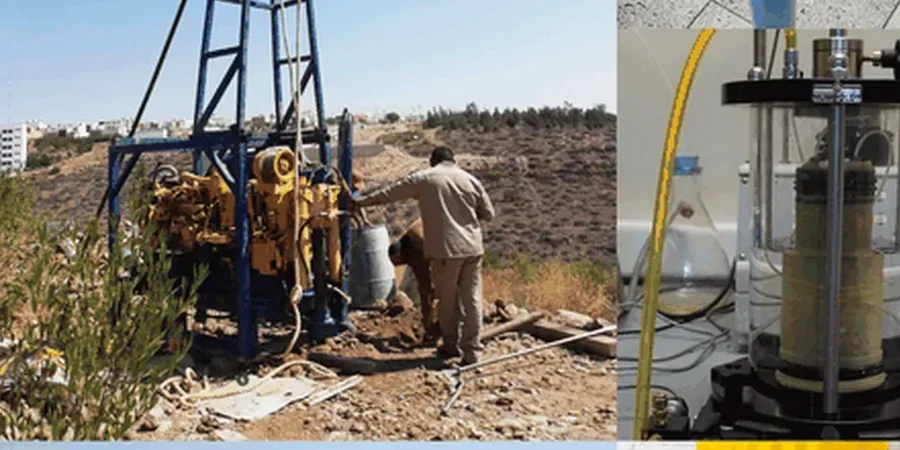
In Kamloops, we often see surprises once you dig past the dry surface crust. The valley floor hides layers of glaciolacustrine silt that change behavior completely when saturated. A proper soil mechanics study goes beyond simple classification: we measure compressibility, shear strength, and permeability under conditions that match the site water table. Our lab processes samples from all over town — from Aberdeen slopes down to Valleyview flats — and we calibrate every triaxial cell against certified load rings. The goal is straightforward: give the structural engineer numbers that hold up in review. When a borehole log shows soft silt at 6 meters, the CPT test can add continuous tip resistance and pore pressure readings to refine the stratigraphy before we even open the sample tubes.

Lacustrine silt from the Thompson Valley can lose 40% of its undrained shear strength when remolded: lab testing catches what a field pocket penetrometer won't.
Geotechnical Engineering in Kamloops
Technical reference — Kamloops

Our service areas

Local geology

Kamloops grew along the confluence of the North and South Thompson Rivers, spreading onto both river terraces and steep sidehill benches. This mix of flat alluvial deposits and colluvial slopes means the geotechnical picture changes block by block. Early subdivisions in the 1960s and 70s dealt with expansive clay in some areas, while newer developments on the south shore encounter compact glacial till. A rigorous soil mechanics study in this city must account for both drained and undrained conditions, because the same silt that stands up in a dry excavation can liquefy under seismic shaking. We run one-dimensional consolidation following ASTM D2435 to get reliable settlement parameters, and we correlate those with grain size data from the same Shelby tube samples. This dual approach catches thin silt seams that a standard boring log might miss. The lab also runs Atterberg limit checks on every disturbed sample, because plastic silts in the valley have fooled more than one gradation curve.

Regulatory framework

NBCC 2020 (National Building Code of Canada), CSA A23.3: Design of Concrete Structures, ASTM D4767: CU Triaxial with Pore Pressure Measurement

Need a geotechnical assessment?

Reply within 24h.

Email: info@geotechnicalengineering.vip

Why choose us

A common mistake we see around Kamloops is designing shallow footings using only SPT N-values and textbook bearing capacity equations for sand, while ignoring the silt-dominated stratigraphy that actually controls settlement. The Thompson River deposits are interbedded: a sand layer might sit over compressible silt that consolidates slowly under load. If the soil mechanics study skips consolidation testing, the owner ends up with differential settlement cracking within three years of construction. We have reviewed reports where the lab classified a sample as low-plasticity silt but never ran a triaxial test, leaving the structural design blind to the undrained strength. In a city where the seismic hazard is real and the water table fluctuates seasonally along the river corridors, skipping those lab steps isn't a shortcut — it's a liability that turns a straightforward foundation into a long-term problem.

Technical parameters

ParameterTypical value
Consolidation (CRS or incremental)ASTM D2435 / D4186
Unconsolidated Undrained Triaxial (UU)ASTM D2850
Consolidated Undrained Triaxial with pore pressure (CU)ASTM D4767
Direct Shear (consolidated drained)ASTM D3080
Atterberg Limits (LL, PL, PI)ASTM D4318
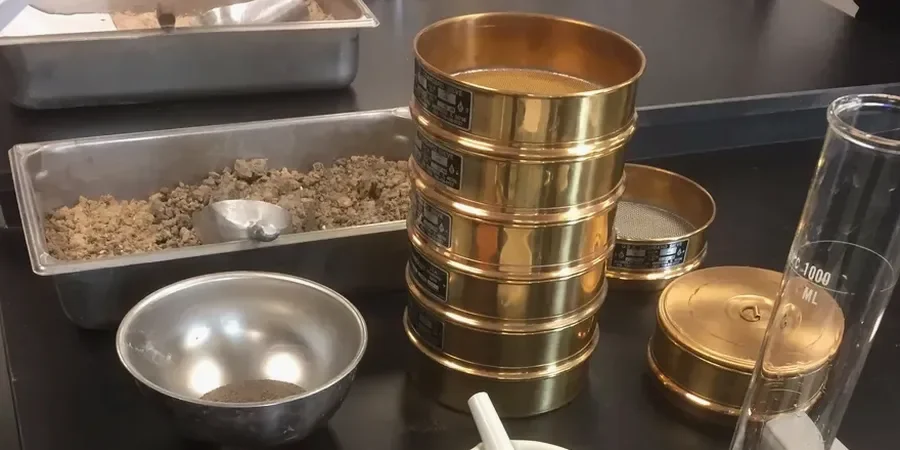
Sieve & Hydrometer AnalysisASTM D6913 / D7928
Moisture Content & Unit WeightASTM D2216 / D7263

Frequently asked questions

What does a soil mechanics study include for a residential lot in Kamloops?

At minimum: moisture content, Atterberg limits, grain size with hydrometer, and unconfined compression or unconsolidated undrained triaxial on undisturbed samples. If the lot is on a slope or near the river, we add consolidation and direct shear. The scope follows the geotechnical engineer's recommendations based on the borehole log.

How much does a soil mechanics study cost in Kamloops?

For a typical residential or light commercial project in Kamloops, laboratory testing for a soil mechanics study runs between CA$3,940 and CA$7,750, depending on the number of samples and the test suite. A basic package with index properties and one triaxial test falls at the lower end; adding consolidation, direct shear, and multiple samples moves toward the upper range.

How long do lab tests take once you receive the samples?

Index properties and classification take 3 to 5 business days. Triaxial and consolidation tests need more time because of saturation and loading stages: allow 10 to 15 business days. We can expedite if the driller flags critical samples and we coordinate the schedule in advance.

Location and service area

We serve projects in Kamloops and surrounding areas.

View larger map